
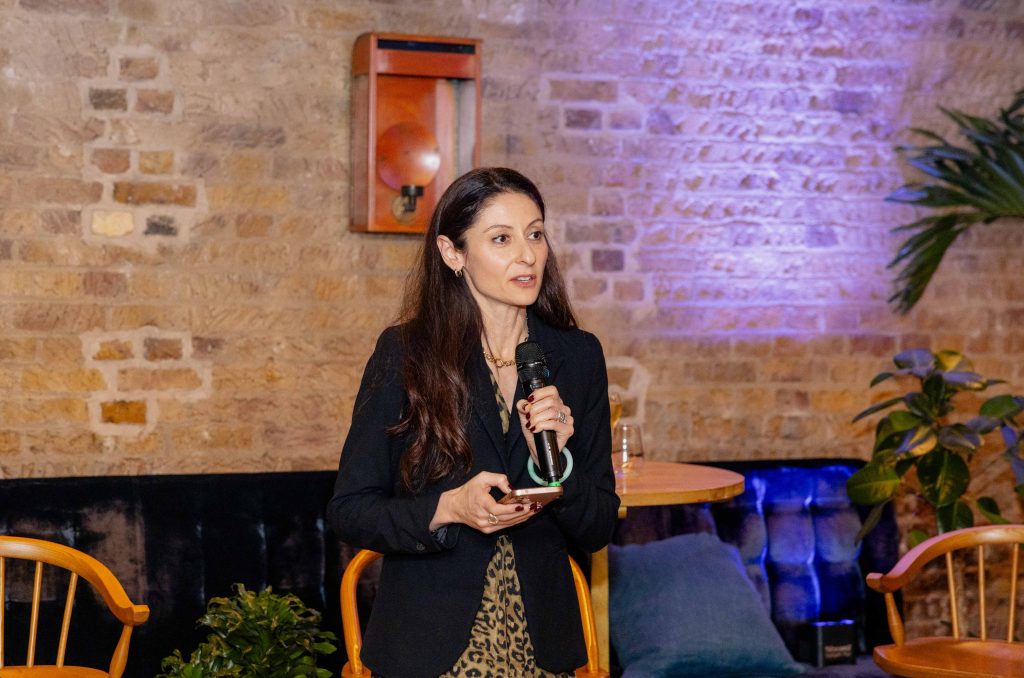
Lauren Sorkin served as R-Cities’ inaugural Executive Director. As she steps forward into what comes next, we sat down with her to reflect on what the network built and what the field learned.
What drew you to urban resilience — and what kept you here?
The question was whether a global network of Chief Resilience Officers could hold together and deliver on its own terms. The answer required proving the business case for resilience — not as an idea, but as something cities could act on and measure. That is where the work started. What kept me here was what kept revealing itself: cities already had the answers and the commitment to deliver for and with their communities. The work was building the infrastructure for those answers to travel.
What are you most proud of having built?
Our early wins and our steepest learning curves came from the same place; moving from strategy to resilience in practice. With Urban Ocean, we began delivering real impact, reducing the plastic waste that enters oceans through cities by partnering with communities on circular waste management. Today, Urban Ocean has delivered 33 place-based solutions around the world.
One of the moments I am most proud of came during the pandemic. Right as we secured funding to run a global network centred on people coming together, we had to figure out how to hold it together virtually. Cities shared knowledge on contact tracing, testing, vaccine rollouts and waste management before the window closed. It cemented something.
“The network’s value is the speed at which what works in one city reaches another.”
When our network gathered in London last year for the Resilient Cities Forum, it was a confirmation of what we have built. Cities showed up and brought solutions. The room reflected the network we have grown: Chief Resilience Officers, city officials, innovators and partners, all moving in the same direction.
What do cities need most right now?
Cities and the field have been asking the same question for years: how to finance resilience projects?
Coming from a development finance background, I saw how many projects were built around the needs of finance rather than the needs of cities. Outside consultants were brought in on a one-off basis. Good projects didn’t get built because the approach was neither repeatable nor scalable.
Then I spoke with Gareth Morgan at the City of Cape Town, who shared how the city was integrating resilience into capital planning and raising private capital on its own terms. It was doing it without the financial instruments typically available only to cities in the US, Europe and Japan.
That was a turning point for the network.
What are you taking with you?
The best city leaders I know spend time with residents and focus on delivering services that make a real difference for everyday people. Mayor Aboutaleb once told me: “Lauren, if you’re just managing it in a spreadsheet, it is probably not leadership.”
When we started, we brought this network through a crisis without a blueprint. We had a strong belief that cities need each other. That belief is now backed by evidence, infrastructure and a community that knows how to move together. What we built together will outlast all of us.