
Southeast Asian cities already live with hazardous heat and humidity. Some of the most dangerous heat stays inside homes at night, when the body needs to recover. A handful of cities are learning to measure it and help communities adapt. The next step is to scale what works.
Heat follows people indoors. By day, streets, schoolyards, markets and transport hubs carry the greatest danger. By night, concrete walls, metal roofs and asphalt roads give back the heat they absorbed.
Melaka sits on Malaysia’s west coast, where it is hot and humid all year. As the days grow hotter, the nights no longer bring relief.
A hot day now means a schoolyard becomes too hot for play, a market worker has nowhere to cool down and a home holds the heat long after sunset, making for a night of broken sleep. It means higher electricity bills, a child kept home from school and respiratory symptoms that grow harder to manage.
Heat arrives as a chain of pressures.
Those pressures fall unevenly. Children, older people, outdoor workers and low-income communities face the greatest exposure and often have the fewest ways to protect themselves. Women carry added exposure through unpaid care work, home-based employment and pregnancy, and usually have less influence over decisions on housing, cooling and public space.
Yet much of the data cities use to understand heat tells them very little about this lived experience. Citywide averages miss it.
A citywide temperature can tell us how hot it is. It does not tell us which homes are hottest at night, which neighbourhoods are most exposed or whether a particular intervention is actually improving people’s health and wellbeing.
Melaka, Penang, Quezon City and Semarang are among the cities already acting. They are learning how to move from promising local action to solutions that can be sustained at scale. Here are three things they are doing right:
1. Start where people feel the heat
The most useful heat-health solutions often start small. A schoolyard. A street. A community centre. A home.
In Semarang and Quezon City, R-Cities has been working with partners on OASIS schoolyards, creating cooler spaces for children while also making them places for learning, play and community life.
Through our Resilience for Communities programme, Melaka extended the idea beyond the school through a School Street and a neighbourhood pocket park.
These interventions change what people feel. They also give the city information. A small intervention shows who needs to be involved, what it really costs, what communities actually value and what a city needs to enable for the solution to last.
That is where the path to scale begins.
2. Make the solution travel with evidence
There is no shortage of ideas for dealing with urban heat. Shade. Trees. Cool roofs. Greening. Early warning systems. Cooling centres. Better building design.
The challenge is often deciding where to act. Cities need evidence that links climate to people’s lives. Where are people exposed? Who is most vulnerable? Does an intervention reduce exposure? Can the city deliver it with the systems and money it already has?
The answers differ from place to place, which is why implementation and evidence have to happen together.
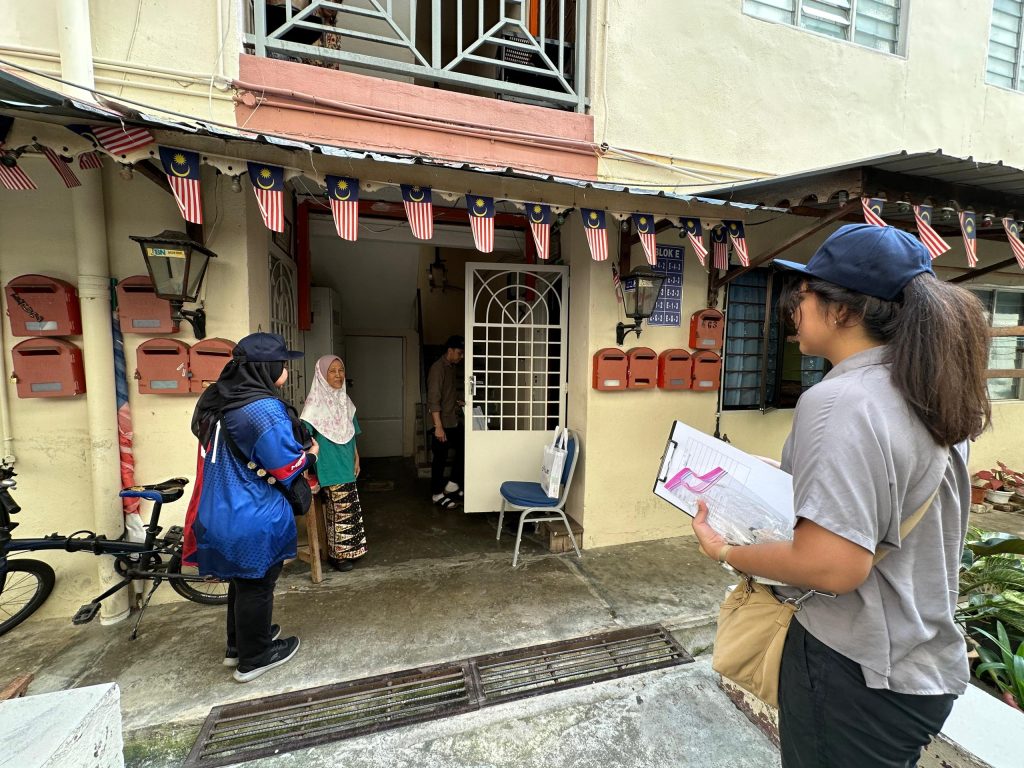
In Melaka, residents took part in measuring the heat in their homes and neighbourhood, which helped the city raise awareness. The neighbourhood and indoor monitoring we developed in partnership with Nanyang Technological University and Monash University Malaysia allowed us to show the city how people really experience heat, particularly inside homes and overnight.
In Semarang, the city is learning to read health and weather together. Its Ckrawala Buana health framework brings weather data together with spatial health data, helping the city see where heat is making people sick and act there first.
3. Build it into how the city works
A city can build a successful pilot and leave the systems around it untouched. Scale asks for more: people inside the city who own the work and, often, a change in policy. Physical interventions and institutional capacity have to move together.
In Melaka, we developed heat-health training for Parakom, the city’s community paramedic volunteer programme. With the Chief Resilience Officer and the city’s team, we designed the training to sit inside an existing government programme. St John Ambulance of Malaysia, one of Parakom’s partners, has now adopted the curriculum in its own training system.
Penang applied the same logic to its neighbourhoods. Through the Penang Nature-based Climate Adaptation Programme, Think City built a Community Heatwave Preparedness Training Toolkit for the people already responsible for local preparedness: the city council and community leaders. Heat preparedness becomes part of how neighbourhoods already organise themselves.
When a solution becomes part of how the city already works, it has a much better chance of lasting.
Bigger than heat
Beyond Southeast Asia, heat is an urgent issue for the majority of R-Cities member cities. Over the past few years, we have seen lessons travel, cities adapt them to their own contexts and resilience leaders use heat as a starting point to strengthen how cities handle a wider set of climate and health risks.
Cities that connect microclimate data with health information can target action better. Communities that help design solutions ground them in how neighbourhoods function. Approaches written into policy, budgets and procurement outlast individual projects. And cities that learn from one another spare themselves some of the hard lessons.
Often another city has already answered the harder questions.
That is the value of having cities learn from one another: they can adapt the lesson rather than repeat the experiment.
Penang, Semarang and Quezon City, for example, work together through R-Cities’ Climate and Health Community of Practice, alongside 30 other cities worldwide. They compare what happened during implementation, adapt approaches and avoid solving the same problems separately.
Scale here means understanding the conditions that make an intervention work, then giving other cities the evidence, flexibility and guidance to adapt it. A schoolyard in Quezon City will look different from one in Semarang. A cooling strategy for a low-income home in Melaka will need reworking for Jakarta.
A solution becomes scalable when we know enough about its conditions for success to decide when to replicate it, when to adapt it and when to drop it. That asks far more than a portfolio of pilots. It is also much closer to the problem cities actually face.
Finance follows the same logic. Each intervention needs a financing model that fits it, and each city needs an ecosystem willing to carry the first risk. Philanthropy plays its sharpest role in the space between an idea and a city-funded programme. It can fund evidence, design, community participation, technical assistance and early demonstration, so public and private capital can follow with greater confidence.
In Melaka, Z Zurich Foundation and Zurich Malaysia backed the early work: assessing where communities were most exposed, building their trust and testing what cools a neighbourhood and what people value. That groundwork brought S&P Global Foundation in to fund the next pilots.
Public budgets carry solutions further. After the first OASIS pilots, Quezon City funded further schoolyards from its own budget.
Investors come in once a solution pays its way. Building retrofits, cooling services and some infrastructure generate savings or revenue, which brings private and blended finance within reach.
Cities have ideas. Communities have knowledge. Researchers have evidence. Governments have mandates and budgets. Philanthropy can take early risks. Investors can finance what is proven. The work is to connect these pieces so that a solution tested in one neighbourhood can become something a city can adapt, fund and sustain elsewhere.
Looking to collaborate on urban heat in Southeast Asia as a partner or funder? Get in touch with Nini Purwajati, our Head of Asia Pacific: [email protected]