Mexico City’s Chief Resilience Officer on translating resilience from theory to practice, convening 19 departments and 16 boroughs under the newly established Resilience Council and forging a unified platform that anchors the city’s approach to risk and resilience.
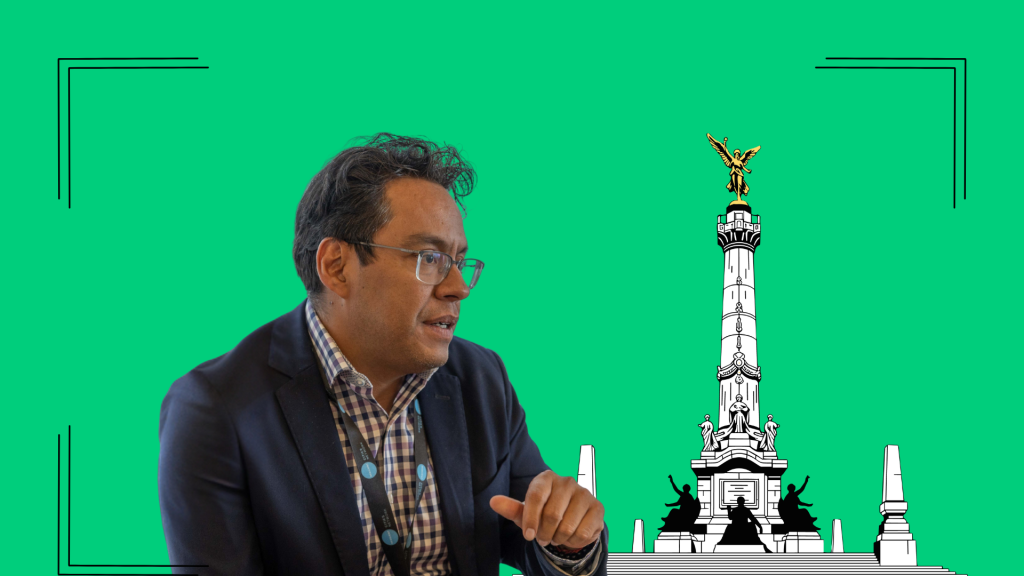
When Norlang García became Mexico City’s Director of Resilience, he faced a daunting task: turning an abstract concept into something tangible. With 18 years of experience in disaster risk management, he had plenty of experience with the material reality of crises like earthquakes and floods, but resilience demanded a new approach.
In 2018, García was invited to help the Mexico City Resilience Agency develop public policy for the city’s newly elected government. The Resilience Agency, established in 2015 and active since 2017, was already part of the former 100RC program. When the new administration took office in 2019, several agencies – including the Resilience Agency – were merged into the Secretariat for Comprehensive Risk Management and Civil Protection.
“Officers who joined in 2019 were not familiar with the resilience strategy”, he says. “They did not know – or did not remember – that there was a Resilience Agency, and they were unaware that a whole global movement existed.”
García was made the new Director for Resilience, taking over from the former Resilience Agency. “It was the most complex challenge I’ve ever faced professionally,” García admits. “I had to rise to the level not only of the Mexico City Resilience Agency, but also of very important cities… it was a huge challenge for me.”
Those first months were a crash course in resilience. “I spent them intensively understanding the concept – the difference between acute impacts and chronic stresses,” he says. “I became more sensitive to issues like water scarcity, mobility and land management… not just seeing them from the perspective of risk or disasters. My brain expanded to topics I used to see only tangentially.”
That same year, an international meeting in Rotterdam proved pivotal. What stood out most was how cities shared openly not only their goals but also the challenges they faced in achieving them and adapting to their environments. This openness inspired García’s team to do the same in Mexico City and reinforced the idea that resilience was something practical and community-driven. With guidance from peers and support from the global Resilient Cities Network, García began turning ideas into action.
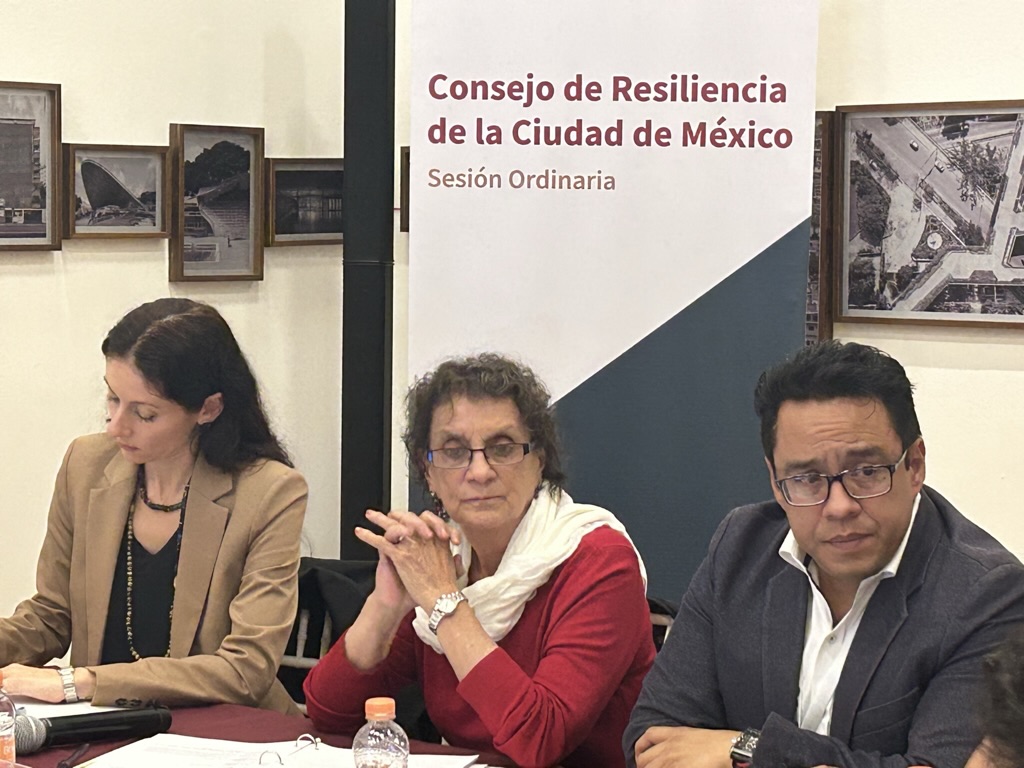
His major step came in 2019 with the creation of the Mexico City Resilience Council. The Council brought together 19 government departments, the city’s 16 boroughs and 47 institutions from the private, public and academic sectors – a crucial move to get all sectors engaged in building resilience. Yet, not everyone immediately understood how their work related to the concept. “I would throw them off balance,” he reflects.
The Council’s approach was to make that connection explicit: bringing the main actors together and saying, “Hey, you’re already building resilience, even if you don’t realize it. There’s a resilience strategy in place, and you can strengthen it by creating synergies and collaborative networks.”
But for García, this had to translate into real action. “We need it to have real substance,” he explains. “The Council must also have access to financial resources or technical assistance so that actors can keep promoting resilience within their own sectors.”
“What I’m most proud of,” he says, “is, first and foremost, having built a team of professionals from scratch in the field of resilience, from different perspectives.” Bringing together experts in science, sustainability, risk management, urban planning and urban development, he shaped a group capable of translating ideas into action.
The Council now operates through 3 active technical committees, focused on urban, seismic and water resilience – all major pillars of resilience in Mexico City. “The vast majority meet once a month,” he notes proudly. “The resilience committees that support the Council are working practically every day – and the people who run them are leading academics in their field.”
“I brought together an important team of colleagues… adapting the concept to the people I needed,” he explains. The result, he says, is a lasting legacy: “a highly specialized team of people for the residents.”
This active and practical work is what’s crucial, and in this regard his work isn’t finished. “We are determined to disseminate the issue of resilience so that more people adopt it as a serious approach, not only in discourse, but in deeds.”
García’s approach has sparked inspiration across the Network. Using his example, Porto Alegre announced the creation of its Comitê Permanente de Resiliência in 2023, officially launching the committee earlier this year.
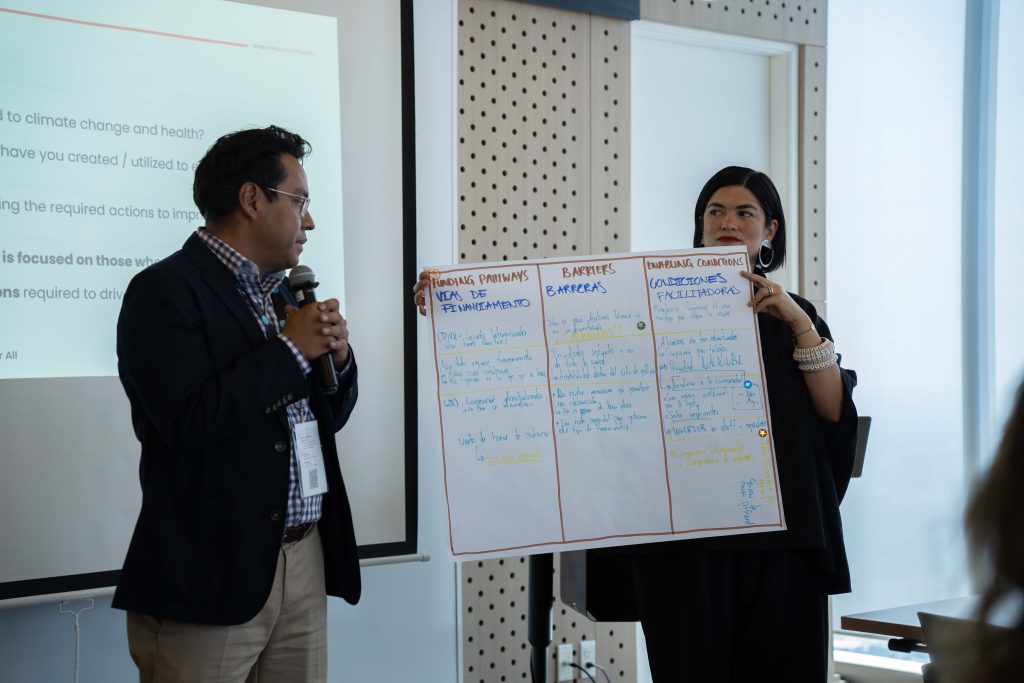
For García, the journey has been transformative, reshaping how he sees his work, the city and his role within it. “Working on urban resilience has changed me to see my city from another point of view,” he reflects. “Now I walk around the city and I see it differently.” The experience has been “extremely enriching, not only professionally, but also as a human being.” He’s become “more sensitive to many issues that before I saw as not being so important,” and now looks at the city “with eyes searching for opportunities, not only the challenges.”
The Resilient Cities Network has provided a guiding hand throughout. “Being part of a network allows you to ask, ‘Hey, how are you addressing climate change [or other challenges]?’ and find a case from another city that can help implement solutions here,” García explains. “Sometimes I say to myself, ‘I’m in discussions with people from Sydney, from Paris,’ and honestly, I never imagined I’d be like this – talking with colleagues from other continents about common issues.”
García’s growth as a leader continues to inspire his colleagues, and now he sits on the Network’s Global Steering Committee, representing the vision and priorities of Latin American and Caribbean cities.
“How has it changed in these five years?”, reflects García on his time in the role. “Many institutions are now saying, ‘Hey, I want to be resilient in some way, how can we make that happen?” What was once an abstract idea is becoming increasingly embedded into the city’s thinking and shaping a more adaptive, resilient Mexico City.