

Gender influences how people access, move through and experience city life, shaping mobility, safety, economic opportunity and access to services.
Gender equity has been recognized as a global goal through Sustainable Development Goal 5, but progress remains uneven. National frameworks set gender equity goals, but local leaders play an outsize role in bringing equity to the streets.
This Women’s History Month, join the first Cities on the Frontline session of 2026 exploring how cities are embedding gender perspectives into urban resilience strategies as a pillar of governance, climate adaptation, economic inclusion and care.
Building on the Compendium of Good Practices in Resilience with Gender Perspective, the session brought together:
- Fernanda Lonardoni, Head of the UN-Habitat Subregion for Mexico, Cuba and Central America, who helped us frame why gender-responsive resilience is both a local priority and a strategic urban imperative.
- Patricia Martínez Barba, General Director of IMEPLAN, who shared how the Metropolitan Area of Guadalajara is embedding gender into metropolitan governance, highlighting how planning frameworks and cooperation mechanisms can institutionalize gender within resilience strategies and scale across cities.
- Fernanda Lordêlo, Secretary of Policy for Women, Children, and Youth in Salvador, who brought this into practice through the Mulher Salvador program, showing how training in solar energy and green jobs is strengthening women’s economic autonomy while contributing to resilience on the ground.
Shaping gender inclusive cities means places that are safer, more accessible and more dynamic for everyone.
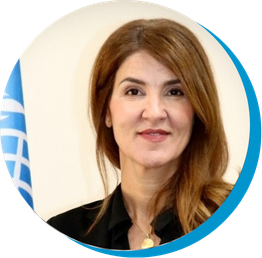
Fernanda Lonardoni
Head UN-Habitat Subregion Mexico, Cuba and Central America
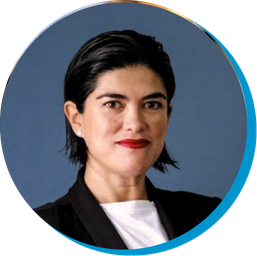
Patricia Martínez
General Director Institute for Planning and Management of Development of Metropolitan Guadalajara

Fernanda Lordêlo
Secretary of Policy for Women, Children, and Youth, Municipal Government of Salvador

Nicole Ponce (Host)
Associate, Knowledge and Communications, R-Cities