The current waste generation and disposal paradigm is unsustainable.
Every year, more than 2 billion tons of municipal solid waste are generated globally, with over 30 million tons of plastic pollution leaking into the environment. This isn’t just an environmental crisis; it’s a threat to public health and urban resilience, particularly for our most vulnerable communities.
Under business-as-usual scenarios, this leakage is projected to increase almost tenfold by 2040.
The battle for a clean ocean begins in our streets. Cities generate most of the world’s waste while facing growing financial and operational pressures. In many cases, local governments spend up to 50% of their municipal budgets on waste management, yet nearly one quarter of waste still goes uncollected, and one third is openly dumped.
Cities are already shifting the question from how to manage waste to how to prevent pollution at the source.
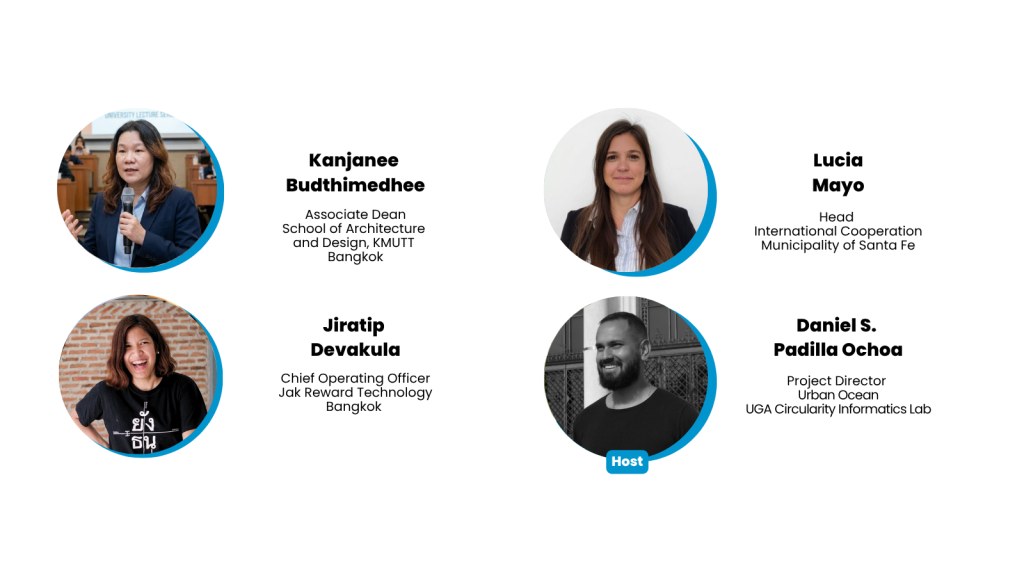
In the third Cities on the Frontline session of 2026, representatives of Urban Ocean coastal cities will dove into how upstream action, partnerships, community engagement, and behavior change are helping translate ambition into implementation.
- Kanjanee Budthimedhee and Jiratip Devakula discussed Bangkok’s efforts to reduce waste leakage into canals and waterways through community-based waste separation, recovery systems and digital traceability.
- Lucia Mayo presented Santa Fe’s efforts to strengthen circular waste systems through Eco Puntos and Sustainability Parks that promote recycling, reuse and community participation, while advancing plans for the city’s first plastic reprocessing plant to reduce plastic leakage.
Curious about how your city can change the tide on waste? Check out the recording.