
Cooling for small businesses

9 local businesses serving hundreds of customers per day installed new air purifiers.
Chinatown, Boston
A microgrant program distributed air purifiers directly to local businesses in Chinatown to improve indoor air quality and reduce indoor heat.
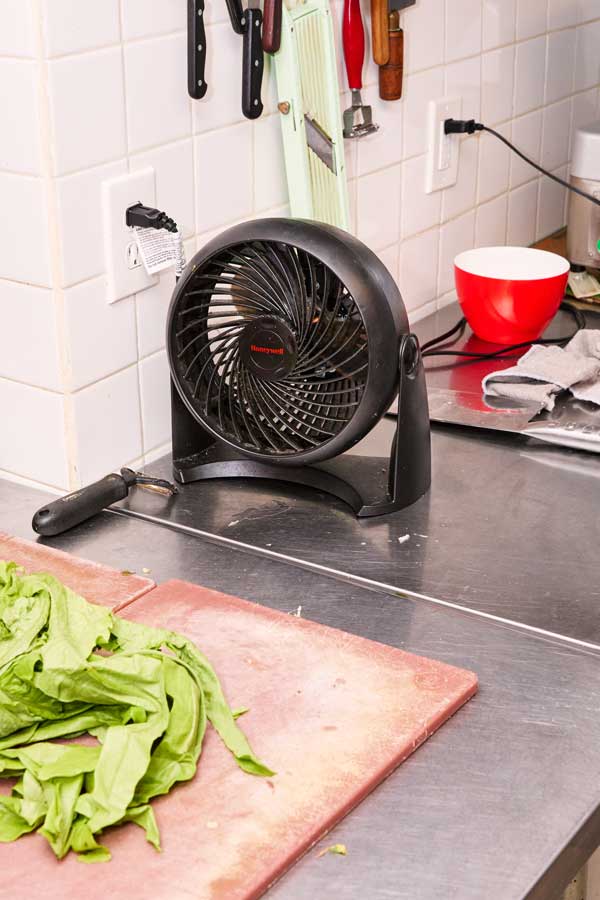
Air purifiers improve indoor air quality and circulate air in overheating restaurants.
Restaurants with cooler, cleaner air are less likely to see a decline in customers in heat waves.
Participating businesses and their employees reported high satisfaction with air purifiers, showing potential to scale in other contexts.
To build a picture of each community, the Resilience for Communities (R4C) program used risk mapping, open-data sources, expert interviews, community surveys and focus groups. This assessment used the Climate Resilience Measurement for Communities (CRMC) tool to assess community resilience to extreme heat and flooding - helping to identify priorities and design solutions.
Sources of resilience — Small business microgrants build on existing Physical and Financial capital in Chinatown’s small business community.
Physical
Financial
Installing air purifiers improves indoor air quality and temperatures in Chinatown, adding tools to the toolkit of actions local businesses can take to adapt to longer summers and higher temperatures.
Improving indoor air quality and temperatures helps Chinatown businesses avoid losing customers during extreme heat events, reducing the financial impact of heat waves on small business owners and their employees.
Impact multipliers — Resilience solutions have a different mix of impact multipliers and impact multiple systems, businesses and societies. Together, multipliers produce an amplified impact.
Reduced pollution
Indoor air quality is an underexplored and invisible threat exacerbated by rising temperatures. Improving air quality in local businesses improves customer experience and reduces the health impacts for workers.
Access to cool spaces
Small business owners and their employees that participated in the program report that installing air purifiers improved air flow and indoor temperatures in their businesses in addition to air quality.
Strengthened SMEs
Hotter days bring fewer customers and lower earnings. In addition to the local businesses served directly by the microgrants program, the simplicity and success of this pilot shows there are ways for businesses to adapt to longer summers and higher temperatures.
How does this solution make a difference? – Addressing prioritized shocks and stresses
Poor air quality
Extreme Heat
Reducing indoor temperatures
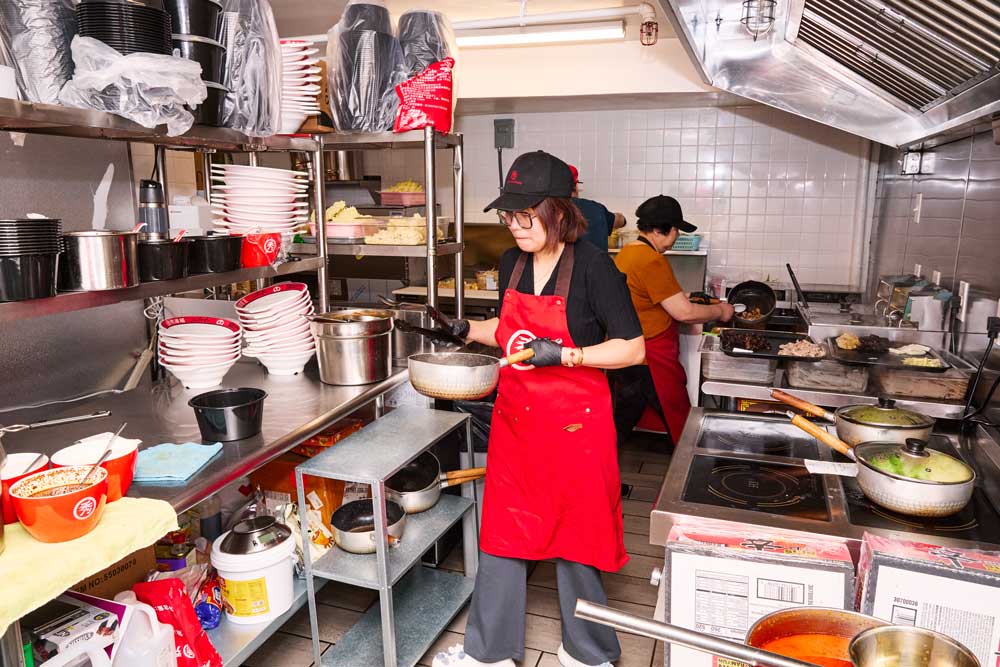
Restaurant kitchens can reach temperatures well over 100˚F. Indoor air purifiers can reduce temperatures, changing air and improving air flow in hot indoor environments.
Improving indoor air quality
Restaurant workers are routinely exposed to poor indoor air quality, and during heat waves, air pollution levels spike. Purchasing indoor air purifiers proved to be a simple and effective solution for small businesses that can easily be replicated.

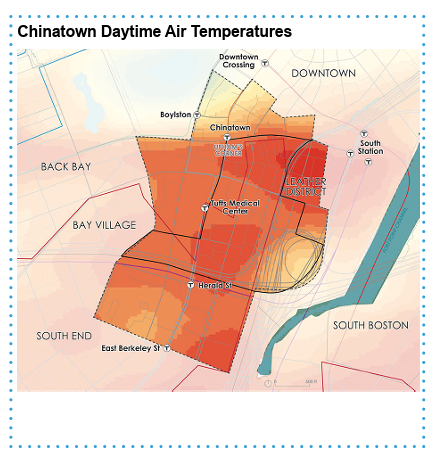
Neighborhood level analysis from the Heat Resilience Solutions for Boston final report (pictured) identified several contributing factors to extreme heat in Chinatown – lack of green space, wide streets with limited tree canopy, dark roofing materials, density and other factors.

Heat and poor indoor air quality directly impact restaurant workers, with many restaurants improvising temporary solutions.