Urban cooling design toolkit

54 downloads and 200+ webinar attendees.
Lower Roxbury, Boston
Co-created with communities, the Tactical Guide to Urban Cooling Infrastructure offers a scalable playbook to install urban cooling solutions.
Building strong partnerships between community members and partners through interactive community engagement activities.
Draft and share the design toolkit as a resource for community stakeholders.
Disseminate design concepts from the toolkit for accessibility and ease of replicability.
To build a picture of each community, the Resilience for Communities (R4C) program used risk mapping, open-data sources, expert interviews, community surveys and focus groups. This assessment used the Climate Resilience Measurement for Communities (CRMC) tool to assess community resilience to extreme heat and flooding - helping to identify priorities and design solutions.
Sources of resilience — Youth-focused training strengthens the community’s financial, physical and human capital.
Natural
Social
The resilience benefits of urban cooling solutions are highlighted in the Tactical Guide to Urban Cooling Infrastructure, from water-based solutions to shading infrastructure. The toolkit supports the scaling and implementation of cooling stations, contributing to resilience by mitigating urban heat in public spaces.
The Tactical Guide to Urban Cooling Infrastructure is co-created with community input to ensure it is accessible and relevant for local stakeholders.
Impact multipliers — Resilience solutions have a different mix of impact multipliers and impact multiple systems, businesses and societies. Together, multipliers produce an amplified impact.
Access to Cool Spaces
Co-designing and distributing the tactical guide puts tools in residents’ hands to expand access to cool spaces.
Increased community cohesion
Bringing community members in to co-design and share their inputs on the community toolkit brings people together around shared goals.
How does this solution make a difference? – Addressing prioritized shocks and stresses
Extreme Heat
Low Awareness
Cooling the community
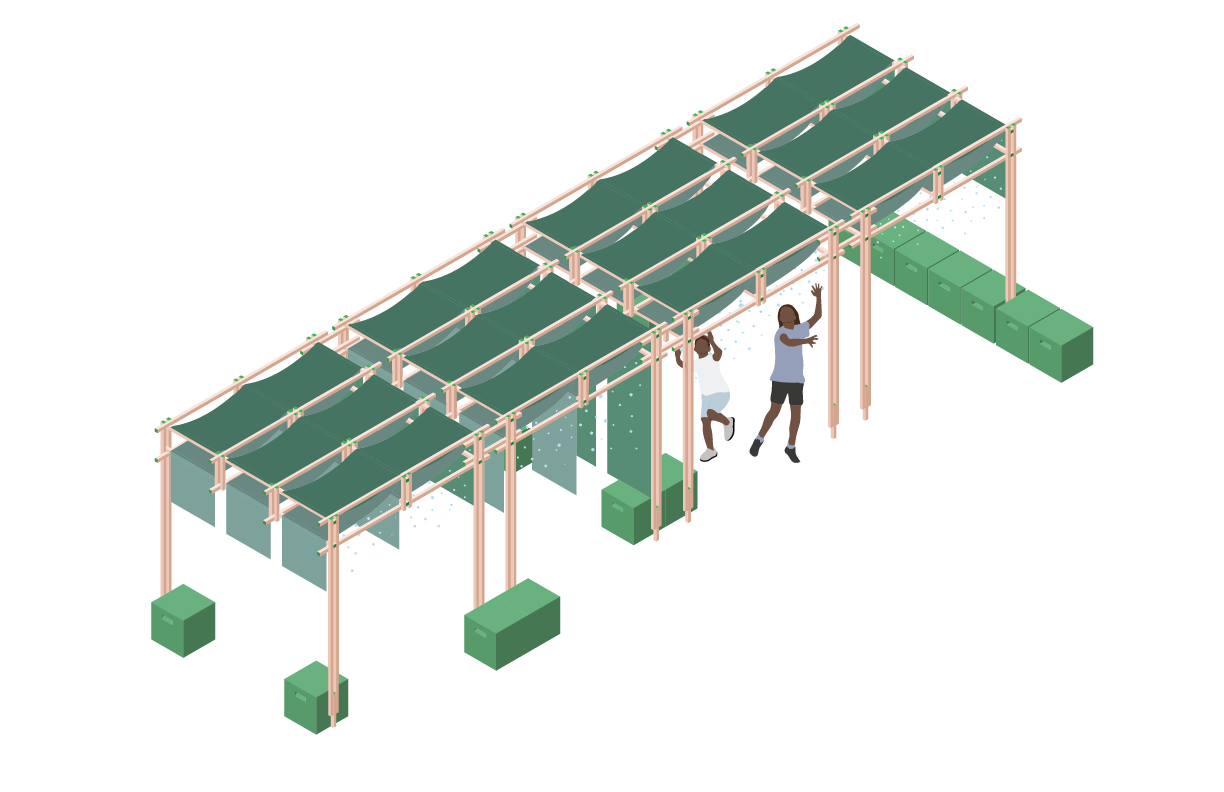
Reducing urban heat exposure by equipping underserved youth with the skills to build climate-resilient infrastructure, including cooling stations with water-based solutions and shading structures.
Tools for action
While Lower Roxbury residents surveyed agree their community should take further action to reduce extreme heat risks, residents are less confident as to how they can make any impact. The Tactical Guide to Urban Cooling Infrastructure gives community members tools to address extreme heat in their neighborhoods.

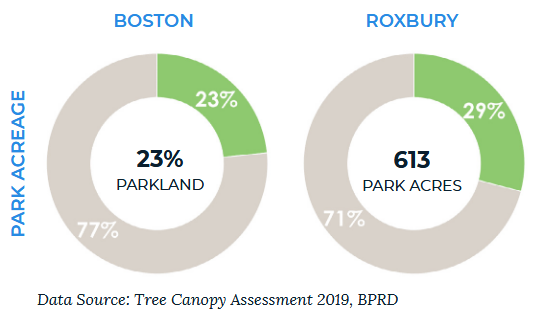
Roxbury and neighboring Dorchester have uneven access to parkland. Outside of Franklin Park, a large park in the southern part of the neighborhood, only 6% of the neighborhood is park space. Uneven park access means not all residents benefit from the cooling features of parks.

Source: Heat Resilience Solutions for Boston Final Report.

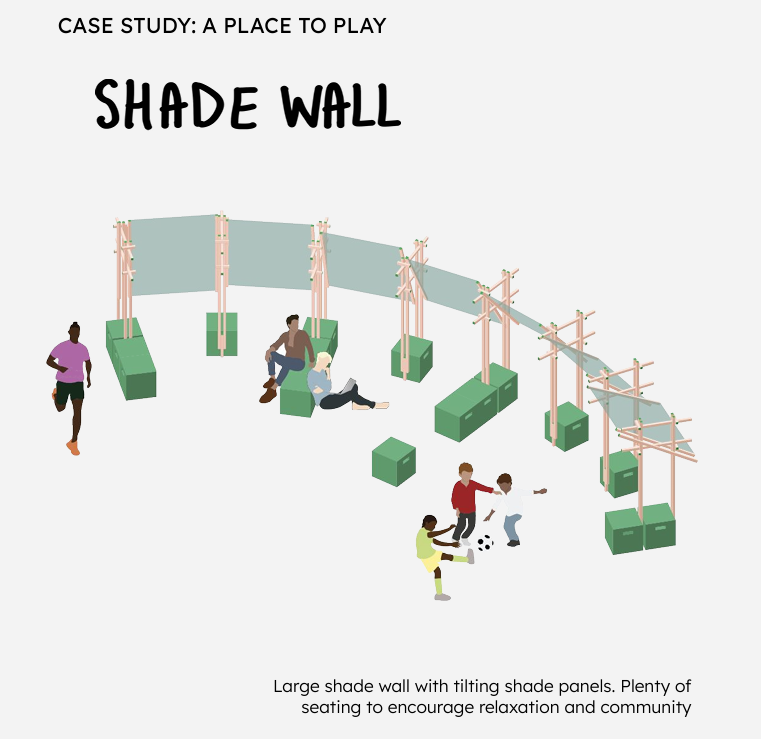
Case studies and easy-to-follow flow charts in the Tactical Guide to Urban Cooling Infrastructure can guide residents and cities to understand and select the best solutions for their local context, such as this large shade wall with tilting shade panels and plenty of seating to encourage relaxation and community.