Access to Nature

Over 400 trees and two pocket prairies are restoring green space across Alief.
Houston, USA.
Residents and volunteers are transforming local schools and community sites into cooler, greener spaces. These plantings capture rainwater, add shade, and create safer, more welcoming places for families to gather and connect.
Two new pocket prairies planted on school grounds are creating cooler, greener spaces that capture rainfall and attract pollinators.
Two community build days brought together local organizations, students, and volunteers to restore native plants and trees.
Shade structures and planting beds are being co-designed with students and residents to improve comfort and encourage community use of outdoor spaces.
To build a picture of each community, the Resilience for Communities (R4C) program used risk mapping, open-data sources, expert interviews, community surveys and focus groups. This assessment used the Climate Resilience Measurement for Communities (CRMC) tool to assess community resilience to extreme heat and flooding - helping to identify priorities and design solutions.
Sources of resilience — Restoring native greenery strengthens Alief’s natural, social, and human capital.
Natural
Human
Social
Restoring native trees and prairies increases local biodiversity and improves soil health. Deeper roots absorb rainwater and reduce surface heat, helping streets, schools, and homes stay cooler and drier.
Volunteer programs and youth engagement create opportunities for residents to gain hands-on skills in planting, maintenance, and design. Spending time outdoors improves physical and mental well-being, while building practical knowledge that supports long-term resilience.
Tree planting and community build days bring people together across cultures and generations. These shared activities strengthen trust and pride in the neighborhood, turning public spaces into places of belonging and care.
Impact multipliers — Resilience solutions have a different mix of impact multipliers and impact multiple systems, businesses and societies. Together, multipliers produce anamplified impact.
Enhance biodiversity
Planting native species in Alief will help address the neighborhood’s biggest vulnerability: heat.
Reduced pollution
Improving the quantity and quality of green spaces in cities significantly improves air quality.
Enhanced drainage systems
Prairie grasses and native plants absorb more water and can reduce flood risks after extreme rainfall.
How does this solution make a difference? – Addressing prioritized shocks and stresses
Extreme heat
Flash floods
Poor air quality
Increasing tree canopy
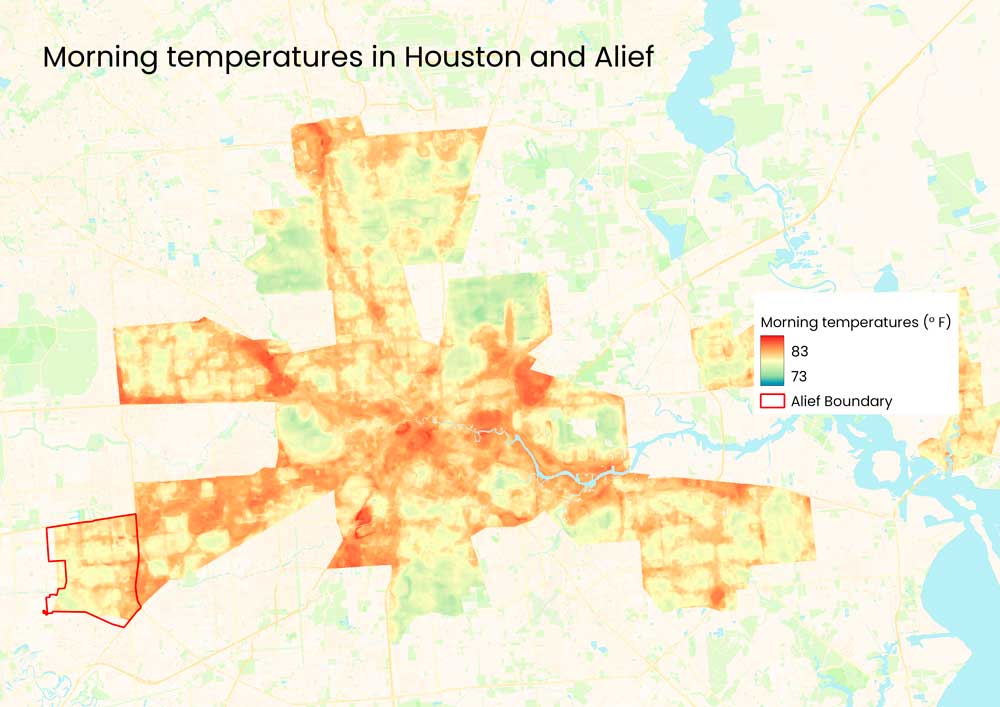
With only 11% tree canopy—far below Houston’s 33% average—Alief experiences temperatures up to 10 degrees higher than well-shaded areas. Planting and caring for trees and native species provides cool shade and reduces the urban heat island effect.
Catching excess rainwater
Mature trees and native plants soak up excess rainwater and reduce flood risks.
Improving air quality
Planting trees and native species helps to improve air quality, community members’ health and well-being.
Alief experiences higher than average temperatures compared to the rest of Houston.