Community Leadership

75+ volunteers engaged in shaping local resilience action.
Houston, USA.
A youth-led, community informed Alief disaster protocol is supporting the community in the event of extreme weather and other shock events
Comprehensive, inclusive and culturally relevant disaster preparedness protocol to guide local, county, and state officials in ensuring the safety and resilience of the community.
The report outlines green infrastructure priorities and heat resilience strategies informed by research from the Houston Advanced Research Center (HARC), addressing not only disaster response but also long-term resilience.
To build a picture of each community, the Resilience for Communities (R4C) program used risk mapping, open-data sources, expert interviews, community surveys and focus groups. This assessment used the Climate Resilience Measurement for Communities (CRMC) tool to assess community resilience to extreme heat and flooding - helping to identify priorities and design solutions.
Sources of resilience — Enhanced food security strengthens the community’s financial, human and social capital.
Physical
Human
Social
Report to outline infrastructure priorities in Alief, particularly its drainage systems, roads, and flood defenses, is a key focus of this report
With a clearly outlined disaster protocol, Alief’s local authorities and volunteers will be better prepared to respond to disasters
As a community, Alief will be better prepared to recover after disasters
Impact multipliers — Resilience solutions have a different mix of impact multipliers and impact multiple systems, businesses and societies. Together, multipliers produce anamplified impact.
Community awareness
The report will clarify the best methods for delivering emergency alerts, including radio, television, social media, text messaging, and community-based networks.
Increased community cohesion
Special attention will be paid to ensuring the information is disseminated in multiple languages, including Vietnamese, Spanish, Chinese, and African dialects.
Improved access to basic services
The report will share how resilience hubs will act as centralized locations for distributing emergency supplies, offering shelter, and connecting residents to essential services, including medical care, legal assistance, and mental health counseling.
How does this solution make a difference? – Addressing prioritized shocks and stresses
Extreme weather
Low awareness
Competing priorities
Emergency preparedness
The disaster protocol will detail guidelines on how residents can respond and prepare in different emergency situations.
Raising awareness
Reaching communities in clear, accessible language will increase community awareness of disaster protocols.
Policy roadmap
The disaster protocol will help the city evaluate investment priorities based on how they enhance community resilience.
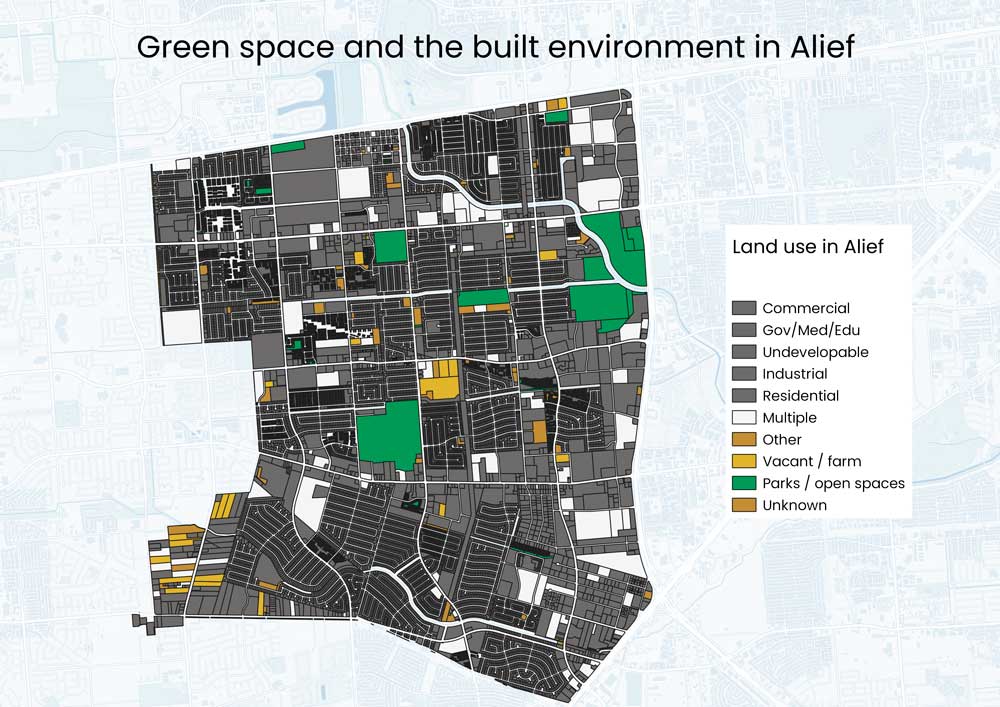
Parks and open spaces make up just 6% of Alief’s surface area. Lack of green space, high extensive pavement, and a concentration of industrial and commercial land-uses all contribute to heat island effects increasing average temperatures in Alief.